
Horror Games

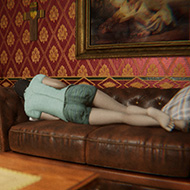
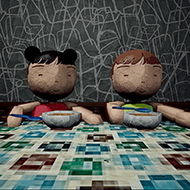
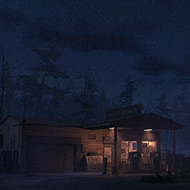
Horror Games at Plushy’s Playground occupy a space unlike any other category in gaming. They are built around tension, dread, and the deliberate withholding of information — all tools that force the player into a state of alertness that few other genres can match. Whether you are navigating darkened corridors with a flickering flashlight or piecing together the cause of some unexplained catastrophe, the pull of Horror Games comes from engagement that is deeply personal and difficult to shake.
What Makes Horror Games Different From Other Categories
Most game categories reward speed, accuracy, or strategy in ways that are easy to measure. Horror Games work differently. Progress in horror is often less about skill and more about endurance — the willingness to push forward when every instinct is telling you to stop. The design principles behind this category prioritise atmosphere over action, suggestion over spectacle.
This distinction shapes everything, from how levels are built to how sound design is used. Silence, in Horror Games, is not neutral. It is either a brief moment of relief or a warning that something is about to happen. That ambiguity is intentional and is one of the primary reasons players return to the genre repeatedly, even after completing a title more than once.
- Pacing: Horror Games move at a slower, more deliberate pace than action or platformer categories. Exploration is central, and rushing through environments typically works against the player.
- Sound design: Audio cues carry enormous weight. Distant footsteps, music-box melodies, or the sudden absence of ambient noise are all used to build and release tension.
- Limited resources: Many horror titles restrict what the player has access to — limited light sources, scarce supplies, or constrained mobility — to reinforce vulnerability.
- Environmental storytelling: Rather than relying entirely on cutscenes or dialogue, Horror Games frequently use the environment itself to communicate what has happened in a space.
Types of Horror You Will Find in This Category
Horror is not a single flavour. The category contains a broad range of sub-styles, and understanding the differences helps you find the type of experience you are looking for.
- Survival horror: The player must manage resources while navigating threats they may not be able to defeat directly. The emphasis is on staying alive rather than fighting back.
- Psychological horror: These games focus on mental disorientation, unreliable narratives, and imagery that is disturbing because of what it implies rather than what it shows outright.
- Atmospheric horror: Less focused on combat or jump scares and more on building a sustained sense of unease. These games are often slower and rely heavily on world-building.
- Puzzle-driven horror: The horror element is layered over a logic puzzle structure. Progress depends on solving problems within the environment, often under pressure or with escalating stakes.
- Action horror: Combines elements of horror with more direct combat. The threat is still present and dangerous, but the player has meaningful tools to push back.
Each of these approaches produces a fundamentally different kind of experience, even when the surface themes are similar. A game categorised as psychological horror and one categorised as survival horror might both involve a haunted building, but the player’s role and emotional experience will differ considerably between them.
How Horror Games Use Space and Environment
Environment design is one of the most important craft elements in Horror Games. A well-constructed space communicates danger, history, and meaning without stating any of those things directly. Designers working in this category tend to use a set of recurring techniques.
- Restricted visibility: Narrowing what the player can see — through darkness, fog, or confined architecture — increases uncertainty and amplifies threat.
- Deliberate clutter: Rooms filled with objects, debris, or remnants of previous inhabitants suggest a world that existed before the player arrived. This grounds the horror in something that feels lived-in.
- Irregular geometry: Spaces that do not follow expected spatial logic — corridors that seem longer than they should be, rooms that appear to shift — create disorientation that reinforces the genre’s emotional goals.
- Points of no return: Moments where the player cannot go back the way they came create forward pressure that builds tension without requiring any visible threat.
These techniques are not unique to any single horror game, but the way they are combined and sequenced defines the tone of each individual title. Two games can use identical assets and still produce entirely different emotional responses based on how those environments are structured.
The Role of the Player Character in Horror
Horror Games handle the player character differently depending on what kind of fear they are trying to generate. Some titles place the player in the role of someone who is clearly capable — a trained professional, an experienced investigator — and use the nature of the threat to strip that competence away progressively. Others begin with a character who is already at a disadvantage: lost, injured, unarmed, or without memory of how they arrived in their current situation.
The second approach is more common in Horror Games that prioritise vulnerability. When the player character has no obvious advantages, every decision carries more weight. The absence of reliable tools or knowledge creates a kind of helplessness that is difficult to replicate in other game categories. It also makes the moments of progress feel more meaningful, because they were earned under conditions designed to work against the player.
- First-person perspective: Places the player directly inside the character’s viewpoint. What the character cannot see, the player cannot see. This is among the most immersive approaches in horror design.
- Third-person perspective: Gives the player slightly more spatial awareness, but introduces a different kind of dread — watching a character walk toward something the player already knows is dangerous.
- Fixed camera angles: An older convention that deliberately limits the player’s field of view, creating tension through what is kept just out of frame.
Multiplayer and Co-operative Horror
Horror Games are not exclusively single-player experiences. Co-operative and multiplayer horror titles have developed into a distinct category within the genre, and they work by exploiting the dynamics of group behaviour under stress.
In co-operative horror, the game typically assigns players asymmetric roles or knowledge — one player might know something another does not, or different players may be able to perceive threats that their teammates cannot. This creates genuine communication pressure. Players must share information, decide who to trust, and coordinate under time constraints or direct threat.
Multiplayer formats that pit players against each other — where one or more players takes on the role of the threat while others attempt to escape or survive — use competition to sustain tension across longer sessions. The unpredictability of human opponents makes these formats particularly effective at maintaining suspense, since a human antagonist does not follow a fixed pattern the way an AI-controlled threat does.
- Hidden role mechanics, where one player’s true objective is concealed from the group, are common in social deduction horror titles.
- Asymmetric multiplayer splits players into distinct factions with different abilities and goals, often with one side vastly more powerful than the other.
- Co-operative formats require active communication and frequently punish players who separate from the group or withhold information.
Narrative Structures Commonly Used in Horror Games
Horror Games have developed a recognisable set of narrative approaches that serve the genre’s goals. Understanding these structures helps contextualise the experience before and during play.
- Discovered narrative: The player pieces together what happened through found documents, environmental clues, and fragments of memory. There is no single source of truth, and the player constructs the full picture gradually.
- Unreliable narrator: The player character’s perception of events cannot be fully trusted. What appears to be happening may be a distortion of reality, a hallucination, or a deliberate misdirection built into the game’s structure.
- Descent structure: The story moves progressively into more hostile and disorienting territory, with each section of the game pushing the player further from safety and familiar ground.
- Circular or looping narrative: The player returns to familiar locations or events with new knowledge that recontextualises what they experienced earlier. This structure rewards attention to detail and careful play.
- Multiple endings: Player choices alter the direction of the story. In Horror Games, this often means that the ending depends not just on what the player does but on what they choose to understand about the world the game has built.
Finding the Right Horror Game for Your Tolerance Level
Not every horror game is built for the same audience, and there is no single threshold of intensity that applies to the category. Some titles are designed to be genuinely disturbing, using imagery and sound to produce a response that lingers after the session ends. Others are closer to a tense puzzle experience with horror framing, where the discomfort is present but manageable and the overall experience leans more toward curiosity than fear.
If you are exploring Horror Games and are uncertain where to start, atmospheric and puzzle-driven options are generally the most accessible entry points. They build tension without relying heavily on sudden scares or graphic content, and they tend to reward patience and observation more than reflexes. If you find those engaging, action horror and survival horror titles introduce higher stakes and more direct threat without requiring the same level of sustained psychological endurance that the more intense sub-genres demand.
- Check whether a title uses jump scares as a primary mechanic or as an occasional element, since this affects the overall tone considerably.
- Look at the pacing description — titles described as slow-burn or atmospheric are usually less immediately intense than those described as tense or relentless.
- Consider whether you prefer a narrative focus or a gameplay-systems focus. Both exist within Horror Games, and your preference will shape which titles you find rewarding.
- Multiplayer horror is often a lower-pressure starting point, since the presence of other players changes the emotional dynamic in ways that make intense moments easier to process.
What Keeps Players Coming Back to Horror Games
Horror Games retain players in ways that are not always easy to explain, especially since the genre is explicitly built around creating discomfort. Part of the answer lies in how the genre handles resolution. In most horror titles, tension is not indefinite — it builds toward moments of release, whether through escape, revelation, or confrontation. Those moments of release are made more satisfying by the pressure that preceded them.
There is also the factor of understanding. Horror Games frequently withhold information and then distribute it gradually. As the picture becomes clearer, the player’s relationship to the world and its threats changes. What was frightening because it was unknown becomes frightening for different reasons once its nature is revealed. This shift keeps engagement high across a full session and gives players a reason to reflect on earlier events once the full context is available.
Horror Games section brings together titles that span the full range of what the category offers — from slower, atmosphere-first experiences to more active and confrontational formats. Browsing the category is a reasonable way to get a sense of the range before committing to a specific title.
Common Mechanics Specific to Horror Games
Beyond atmosphere and narrative, Horror Games rely on a set of mechanical tools that directly shape how fear is produced and sustained during play.
- Sanity or fear meters: Some Horror Games track the player character’s mental state as a visible resource. Exposure to disturbing events drains the meter, and a depleted meter changes how the game behaves — distorting visuals, altering controls, or triggering in-game consequences.
- Save restrictions: Limiting when and where the player can save progress raises the stakes of every decision. Knowing that a mistake will result in replaying a significant section changes how carefully the player moves through the environment.
- Stealth requirements: Many Horror Games include sections or entire playthroughs where direct confrontation is not viable. The player must avoid threats rather than overcome them, which changes the dynamic from challenge to evasion.
- Inventory management: Restricting how much the player can carry forces choices about what to keep and what to leave behind, adding a layer of planning to environments that are already designed to be stressful.
- Permadeath: Some Horror Games end permanently when the player character dies, with no opportunity to reload. This raises the emotional weight of every encounter and changes how risk is calculated throughout the session.
Horror Games are one of the few categories where the mechanics themselves are part of the fear-generating design rather than simply the means by which challenges are presented. A save restriction is not just a difficulty setting — it is a tool for making every corridor feel more consequential. That integration of mechanical and emotional design is what distinguishes the strongest Horror Games from titles that simply apply a horror aesthetic to an otherwise conventional format.