


Plushy’s Playground 2
Fleeing The Complex
Five Nights At Freddys 3
KinitoPET
Sonic’s Last Life
Level Devil

We Become What We Behold










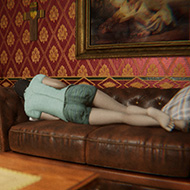

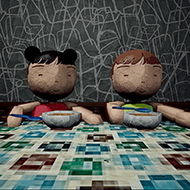


Nineteen endings. Not “many,” not “several” — nineteen counted, catalogued, and confirmed: nine bad, seven good, two the game itself labels “brutal,” and one buried under a question mark that nobody outside the community bothers translating into words. Yes, I’m alone 2 hands you that number early and then spends the rest of the runtime making sure you understand how little of it any single playthrough will actually show you.
Nothing here resets. The protagonist chose the visitor at the close of the first game, and Yes, I’m alone 2 opens already living inside the consequences of that — no recap screen, no gentle reintroduction, just a household that’s quietly stopped being only human. Dialogue assumes you remember what happened before, which sounds like a minor detail until you’re three scenes in and realize a throwaway line only lands if you played the original in order.
What surprises first-time players isn’t horror imagery — there’s very little of that early on — it’s how domestic everything feels. A shared meal. A door that stays locked for reasons nobody explains. A conversation that circles the same topic twice and goes nowhere both times, on purpose. Readers drawn to horror that simmers instead of jump-scares tend to name this stretch as the strongest writing in the whole game, precisely because it refuses to hurry.
That patience is backed by an enormous amount of original artwork — 424 separate illustrations, each one a distinct expression or moment rather than a reused pose with a different mouth swapped in. Once the visitor starts showing up more — the point the fanbase shorthand calls “the shift” — you can feel the art budget reallocate toward emotional beats specifically, which is the kind of production choice players notice and talk about even when they can’t quite articulate why a scene hits harder than it should.
Victor plays the anchor. He’s the character conversations return to when the protagonist needs a gut-check on how far they’ve drifted from who they were before any of this started, and scenes with him tend to read less like plot and more like a mirror held up at an inconvenient angle. Pale sits somewhere closer to the visitor’s gravity — unsettling in the same breath as magnetic, and never quite one or the other for long.
Pale is also the character most players are chasing when they say they’re “going for the good ending,” and Pale does not reward impatience. Push too hard, too early, and Pale deflects or withdraws rather than meeting you halfway — several scenes exist purely to punish the obvious flirtatious option. Players who work through the slower, less flashy dialogue branches before committing to anything tend to reach Pale’s warmer material; players chasing the shortcut usually don’t.
Signs: the visitor periodically asks the protagonist to show them something, and your answer — comply or refuse — feeds silently into which of the nineteen endings you’re drifting toward, with no meter, no warning, and no confirmation that anything just changed. The community has settled on calling this “the signs system,” and it’s usually the first mechanic new players ask about once they notice their choices there seem to weigh more than ordinary dialogue picks.
Pale’s arc doesn’t really open until several signs interactions have resolved a particular way — a gating decision that’s split opinion online. Some players find the wait rewarding once it pays off; others think the good material sits too far behind a mechanic the game never explains.
The number used to be bigger. Twenty-seven endings were mapped out before the project got trimmed down to fit its final scope, and that abandoned ambition still shows — the surviving nineteen feel dense enough that trimming eight barely registers as a loss unless you know to look for the seams.
So: how many endings does Yes, I’m alone 2 actually have, confirmed and final? Nineteen — nine bad, seven good, two brutal, one “???” — and that last one is unlocked through a combination of choices that don’t obviously belong together on a first read, which is exactly why it stays hidden for most players until someone posts a guide.
One specific route the community trades notes on constantly: reaching a particular good ending by declining every single time the visitor asks to see something — but only if you’ve already found a broken plate tucked into a room off the bedroom, early, before that choice ever comes up. Skip the plate and the whole ending is locked out permanently for that save, no matter how perfectly you play everything after. Players who wander every room before pushing the plot forward tend to trip over the plate by accident; players who click straight through environments almost never do.
The unlocked-endings gallery works as a soft checklist rather than a hard requirement, but it’s an effective one — completionist players keep replaying scenes they’ve technically already seen just to fill in one more missing portrait.
Most visual novels announce their forks. Yes, I’m alone 2 mostly doesn’t. A door you happen to check, an object you glance at and move past, a moment you let sit unremarked — these carry weight the game never flags as important, and that’s exactly what splits the community’s opinion of it. Some players love that a second playthrough can feel like an entirely different story unfolding from choices they didn’t know they were making. Others find it genuinely frustrating to lose an ending to a detail they had no real way of anticipating the first time through.
The project also isn’t an official continuation of the game it borrows characters and premise from — the writing, art, and music are original work built on top of that shared foundation, not a licensed sequel. That distinction matters for anyone wondering whether the source material is required reading first; it isn’t, though it deepens a few references. English and Spanish support has widened the audience considerably beyond what a single-language release usually reaches at this scope.
Because so much hinges on choices that never announce themselves, a habit has taken hold in the community rather than being suggested by the game itself: keep a manual save before any scene that feels even slightly significant, since there’s rarely a second warning before a path closes.
However your run ends — Family gathered around Pale, a brutal ending you didn’t see coming, or the “???” outcome nobody explains — Yes, I’m alone 2 keeps returning to the same question the visitor keeps putting to you through both Victor and Pale: how much of yourself do you actually let someone else see, and what does it cost you either way.