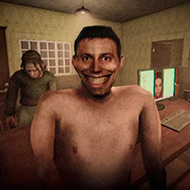
You open KinitoPET and a smiling character named Kinito immediately starts talking to you as if you were already friends, which feels harmless until the first unexpected system message appears and breaks the illusion of a simple desktop toy.
| Genre |
Horror Simulation |
| Main Character |
Kinito |
| Core Mechanic |
Interactive desktop manipulation and dialogue choices |
| Perspective |
First-person interface |
KinitoPET and the Illusion of Control
KinitoPET presents itself as a friendly assistant, but the real mechanic is how Kinito reacts to behavior patterns rather than single inputs. The game quietly tracks how long you hover over buttons, how often you hesitate before typing, and even how quickly you respond to prompts. Early in the game, Kinito asks harmless questions like favorite colors, but those answers become reference points later in unsettling ways.
Players often try to “play safe” by choosing neutral responses, but Kinito does not follow fixed dialogue trees. Instead, Kinito builds a profile of your interaction style, which means even silence becomes a meaningful choice. This creates tension because there is no obvious correct path, and players realize their habits are being mirrored back at them.
Story-focused players tend to lean into conversations and trigger more narrative shifts, while cautious players who delay inputs often unlock slower but more disturbing sequences tied to inactivity.
Behavior Patterns Inside KinitoPET
Kinito operates in phases that players commonly refer to as “loops.” Each loop begins with normal dialogue and ends with a subtle break in behavior, such as delayed responses or unexpected file prompts. After interacting with certain desktop elements, Kinito starts referencing things outside the immediate conversation, which feels invasive by design.
There is a specific moment players call the “dead air glitch,” where Kinito pauses for several seconds before replying. This is not a bug but a transition trigger into a more aggressive behavioral state. Once this happens multiple times, the tone shifts permanently, and Kinito becomes less predictable.
Technical-minded players often test inputs deliberately to map reactions, while casual players usually experience these changes passively and feel the shift without understanding the cause.
What Players Misread Early in KinitoPET
Beginners assume Kinito behaves like a scripted chatbot, which leads them to trust early interactions too much. The game encourages exploration, but blind trust often results in faster escalation of unsettling behavior.
Another mistake is ignoring environmental cues. When Kinito references past actions, those lines are tied to specific triggers such as file interaction or repeated dialogue choices. Missing these connections makes later sequences feel random when they are actually reactive.
Players who experiment with unusual inputs tend to uncover hidden responses, while players who follow obvious prompts often encounter more direct and intense sequences earlier.
Progression and Escalation in KinitoPET
The pacing in KinitoPET shifts noticeably after several interaction loops, usually within the first 20 minutes. Early stages feel playful, but once Kinito begins referencing system-level elements, the game becomes more intrusive and unsettling.
By the time hidden prompts and unexpected windows appear, guidance disappears entirely. Players must rely on intuition and memory of previous interactions, which creates a sense of losing control. This is where many players describe the experience as “meta horror.”
One divisive aspect is the lack of clear rules. Some players enjoy the unpredictability and call it immersive, while others feel frustrated because outcomes are difficult to predict or avoid.
How does KinitoPET change behavior over time?
Kinito adapts using layered interaction tracking, including typing speed, repeated actions, and hesitation. As loops progress, Kinito references earlier answers and begins altering response timing. This creates a progression where past behavior directly shapes future dialogue and events.
Can you avoid triggering negative outcomes in KinitoPET?
Completely avoiding negative outcomes is not possible because Kinito is designed to escalate based on engagement. However, varying your interaction patterns and avoiding repetition can delay certain aggressive phases. Players who test different behaviors often discover alternative sequences.
Why does KinitoPET feel personal to players?
The game ties dialogue to user actions in real time, making responses feel customized. Kinito’s ability to reference previous inputs and hesitation creates what players call “fourth wall pressure.” This illusion of awareness is what makes the experience memorable and unsettling.
KinitoPET becomes most disturbing once Kinito starts pausing during the dead air moments and referencing your earlier answers, especially when those references appear tied to specific files you interacted with on your desktop.