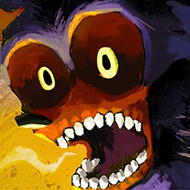
What happens when TungTung stops following predictable patterns and starts reacting to your fear instead of your movement? TungTung’s Nightmare places you inside a looping dream where survival depends on understanding how TungTung behaves across shifting environments. The game blends puzzle solving with psychological pressure, forcing players to question what triggers danger and what is safe. Even early loops introduce subtle inconsistencies, which gradually train players to stop trusting static layouts.
Dream Loop Structure in TungTung’s Nightmare
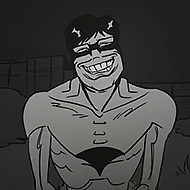
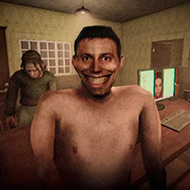
The game revolves around repeated dream cycles where rooms subtly change each time. TungTung appears in different forms, sometimes as a shadow figure and sometimes as a distorted presence near doors or hallways. Early in the game, players often assume each loop is identical, which leads to repeated mistakes and unnecessary panic.
By the third or fourth loop, changes become more aggressive, with furniture shifting positions and doors locking unpredictably. TungTung begins appearing closer to the player’s intended path, forcing constant adjustments. This escalation creates a rhythm where observation matters more than speed, especially when returning to previously explored areas.
Exploration-focused players thrive here because they track environmental differences, while speed-focused players often fail due to missing subtle clues.
Understanding TungTung Behavior in TungTung’s Nightmare
TungTung reacts to both movement and hesitation, which makes the AI feel unpredictable even after multiple loops. Standing still too long can trigger appearances, while moving too fast through narrow corridors can also attract attention. This balance creates tension that many players describe as “pressure tracking,” where the game seems to respond to your behavior rather than fixed rules.
Once TungTung begins appearing in mirrors, the game shifts into a more complex phase. Mirrors act as both warnings and traps, forcing players to decide whether to look directly or avoid reflections entirely. This mechanic becomes especially dangerous in narrow spaces where avoiding eye contact is difficult.
This system is divisive in the community because some players feel it punishes cautious play, while others argue it adds depth to the psychological aspect.
Environmental Clues and Puzzle Signals
Puzzles in the game rely heavily on environmental storytelling rather than explicit instructions. Notes, flickering lights, and object placement all hint at correct actions, but none of them are guaranteed to be accurate. For example, a tilted chair might indicate a hidden passage in one loop but serve as a distraction in another.
By the time you reach the Red Corridor, clues become more abstract and harder to interpret. Players must rely on memory from previous loops to understand what has changed and what remains consistent. This is where the game expects players to combine observation with intuition.
Pattern recognition becomes the most important skill, especially when multiple clues appear at once.
Player Mistakes and Recovery Patterns
Beginners often restart loops too quickly instead of learning from them, which slows long-term progress. Each failure contains information about TungTung’s behavior and environmental triggers, but recognizing that requires patience. Players who analyze mistakes tend to improve faster than those who rely on reflexes.
Loop learning means using each reset to refine your understanding of triggers, safe zones, and visual cues that indicate danger. Advanced players often take mental notes of small details like light flicker timing or door positions.
Once TungTung begins appearing both in front and behind the player in later loops, panic becomes the main cause of failure rather than lack of knowledge.
How do you avoid TungTung in mirror sections?
In mirror areas, avoid staring directly at reflections for too long because TungTung reacts to sustained eye contact. Move steadily past mirrors while maintaining awareness of nearby exits and hiding spots. Players often combine quick glances with movement to reduce risk without losing spatial awareness.
Why do rooms change every loop?
The shifting rooms are part of the core mechanic designed to challenge memory and observation. Objects like doors, lamps, and notes reposition to guide or mislead players depending on the loop. Understanding these changes helps predict where TungTung might appear next and which paths remain safe.
What triggers TungTung attacks?
TungTung attacks are triggered by a mix of movement speed, hesitation, and environmental interaction. Standing still in unsafe zones or rushing through critical areas increases the chance of an encounter. Players learn to balance movement and awareness to minimize these triggers.
TungTung’s Nightmare builds its identity around uncertainty, especially once mirrors and the Red Corridor begin overlapping in later loops. When TungTung appears both ahead and behind near shifting doorways, TungTung’s Nightmare turns from a puzzle-focused game into a psychological test of how well you adapt to changing rules.