


Plushy’s Playground 2

Fleeing The Complex
Five Nights At Freddys 3

KinitoPET

Sonic’s Last Life

Level Devil

We Become What We Behold






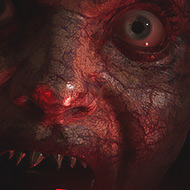








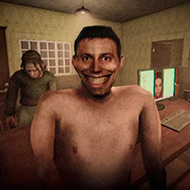

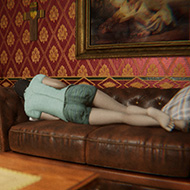

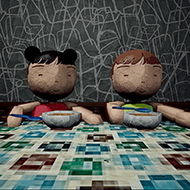


You walk through the front door after school, same as always, and something about the living room feels off before you can even say what changed — that’s the entire premise of That’s Not My Mom!, repeated once a day for as long as you can keep noticing.
| Genre | First-person anomaly horror |
| Perspective | First-person |
| Main Character | A young elementary school boy |
| Core Loop | Inspect the house each day, spot anomalies, judge whether the mother figure is real |
Structure here isn’t built around levels — it’s built around days. Each return from school is another pass through the same house, and the game rarely tells you outright what’s changed, which means the first day matters more than it looks like it does. Players who don’t memorize furniture placement, picture frames, and small household details on that opening walkthrough end up guessing on later comparisons instead of actually knowing, and by the time an anomaly shows up in a room they only half-remember, it’s usually too late to be certain.
That memorization habit is exactly what the community calls “anomaly hunting” in discussions of the game — treating each day like a spot-the-difference puzzle against your own memory of the house rather than against any on-screen checklist. There’s no journal or highlight system doing the work for you, which is precisely why the term caught on among players comparing notes on what they’d missed.
Completionists tend to take the slowest, most methodical route through every room on day one specifically because it pays off across the roughly 23 days the full playthrough covers, and players who rush that first day almost always end up replaying the run once they realize how much a solid baseline actually matters later.
New players commonly underestimate how granular the anomalies can get — object counts, not just object presence — which means a genuinely careful first pass through the kitchen and living room sets the tone for how confidently a player can judge every visit that follows.
The central tension isn’t the house itself, it’s her — is the woman in the kitchen actually your mother, or something wearing her face. Early days keep the differences subtle: a slightly wrong expression, a tone of voice that lands just a bit off. Once the game gets further in, the mimics become more convincing, and telling a real interaction from a dangerous one gets genuinely harder rather than easier, which is a deliberate escalation rather than a difficulty spike for its own sake.
One wrong call goes badly in both directions — accept an impostor and something dangerous gets let inside, but reject the real mother and that has its own consequences too, which keeps players from just defaulting to suspicion every single day. That two-sided risk is what separates That’s Not My Mom! from simpler spot-the-difference formats, since caution isn’t automatically the safe choice.
Players who lean too hard on rejecting anything remotely unusual tend to lose the thread of the story faster than players willing to sit with genuine uncertainty, since some of the most important story beats only surface when the real mother is allowed through on an uneasy day.
Beyond the mother herself, the house changes in smaller ways — a missing picture frame, a duplicated piece of furniture, an object count that doesn’t match what you remember from the day before. Once you reach the later days of the game, these environmental anomalies start overlapping with the mother’s behavior, so a wrong picture on the wall and a slightly wrong voice in the kitchen can show up in the same visit, forcing a player to split attention between two different kinds of scrutiny at once.
Players who rush through rooms to save time in early days often regret it once the anomalies stop being obvious, since the game leans harder on memory the further you get. A duplicated cushion on a couch is easy to catch on day three; by day fifteen, spotting the same kind of change requires actually remembering what day three’s couch looked like in the first place.
Some anomalies are purely cosmetic red herrings meant to train suspicion, while others directly foreshadow the larger anomaly outbreak spreading through the city — and part of the challenge is that the game never flags which is which in the moment.
Later days introduce direct danger — the entity behind the anomalies doesn’t stay passive forever, and misjudging an encounter can trigger a pursuit through the house rather than a quiet failure screen. These chase sequences are a noticeable tonal shift from the careful, observational pace of the earlier days, and it’s a point some players find jarring rather than a natural escalation.
That shift from quiet inspection to active pursuit is one of the more debated design choices among players — some find it earns the buildup, others feel it breaks the slow-burn tension the game spends its early days establishing. Both reactions show up regularly enough in community discussion that it’s worth going in with tempered expectations either way.
Surviving a chase generally comes down to knowing the house layout well enough to find the nearest safe route without hesitating, which rewards exactly the kind of careful early-day exploration that players who skipped ahead too fast tend to lack when it matters most.
A full playthrough runs across roughly 23 days, each representing another return home from school, with anomalies and encounters escalating steadily as the days go on and later visits combining multiple types of anomaly at once.
Letting an impostor version of the mother figure into the house has consequences that carry forward, though rejecting the real mother on a day she’s genuinely herself isn’t safe either — both wrong calls affect how the run plays out, which is why careful players treat every single day as its own judgment call rather than applying a blanket rule.
Observation. The game builds tension through inspecting rooms, reading behavior, and comparing details against memory rather than relying on frequent jump scares, though later days do introduce direct chase sequences once the anomalies escalate past simple visual differences.
What keeps players opening the front door again in That’s Not My Mom! isn’t any single scare — it’s the accumulating dread of knowing the mother figure waiting inside might not be the one who left that morning, and having only your memory of the house, day after day, to prove it either way.