What Plushy’s Playground Actually Is
The first thing most players get wrong is treating this like a traditional horror game. There are no jump routes to memorize, no patterns to dodge, and no safe rooms. Plushy’s Playground is a layered investigative experience — closer in structure to an escape room than a survival game. Your entire toolkit is a mouse, a keyboard, and your attention. The game never tells you what to do next. Progress depends entirely on noticing things, connecting things, and being willing to go back to content you already watched with new eyes.
The fictional premise is that you’ve stumbled onto an old children’s entertainment website featuring a puppet character named Plushy and his associated programs. The site is structured around videos, a restricted section, a chat interface, and various interactive panels scattered throughout. At first glance it reads as a partially broken site — buttons that seem non-functional, layouts that appear random, videos that feel slightly off in ways you can’t immediately name. None of that is an accident. Every element of the interface is deliberately designed, and apparent dysfunction is usually a mechanic waiting to be understood.
Players who come from games like Five Nights at Freddy’s 3 sometimes expect a creature to actively hunt them. That expectation is wrong here, and holding onto it will slow you down. The danger in Plushy’s Playground is never mechanical — it’s revelatory. The horror deepens as you understand more, not as you survive more.
Game Information
| Genre |
Analog horror / ARG (alternate reality game) |
| Platform |
Browser (web-based) |
| Core mechanic |
Exploration, puzzle-solving, and decoding within a simulated website interface |
| Key characters |
Plushy (the mascot antagonist), Tickles (Plushy’s named companion), Janice Dakin (disappearance referenced in lore) |
| Primary zones |
Video section, restricted adult section (accessed via username the_slide and access code 967239), camera feed panel, AOL-style message system |
| Modes |
Single non-linear exploration mode with multiple puzzle branches |
The Videos and What They Contain
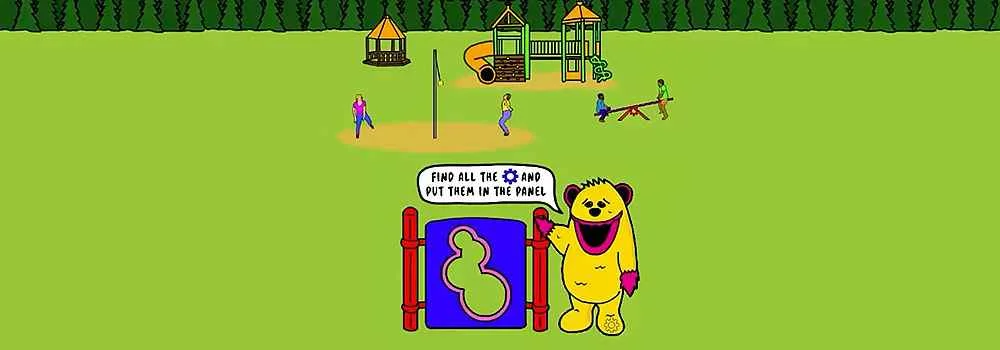
The video section is the spine of the game. Three main videos introduce Plushy in his puppet form — cheerful, slightly stilted children’s-show content that tips into unsettling almost immediately. Video 1 features Plushy talking to two girls about playgrounds. One girl says she’d rather be with her father. The way the scene escalates from that small refusal is the moment most players realize this is not safe content. By the end, the father is tied to a tetherball pole in a manner that is described but not shown — analog horror’s preferred technique of letting your imagination carry the real weight.
Video 2 is quieter and in some ways more disturbing for it. Plushy plays Marco Polo with a girl who never responds. He keeps calling. The silence between calls stretches. Players who sit through the full clip without skipping report a specific kind of dread that purely visual horror rarely achieves — it’s the patience of something that knows it will be answered eventually.
Video 3 is where the game breaks into active mechanics. Plushy tells the viewer they need to know a password to enter the playground, then reveals it himself: the name of his friend Tickles. Entering that password triggers Plushy’s true form for the first time — a jumpscare that transitions to a secret page displaying four number codes. Three of those codes each have associated videos attached. The fourth, 66530, leads to something different entirely.
Scattered throughout the video section are clips numbered with five-digit codes rather than simple titles. Video 37051 puts you in a sewer with an Elmo toy on a chair that moves on its own. Video 85971 shows Plushy luring a child to a slide using an Elmo toy, then taking her when she reaches the top. Video 22031 documents an attempt to summon Plushy using a Teddy Ruxpin and a Ninja Turtle. These don’t play in sequence — players discover them as they unlock different sections. The out-of-order viewing is part of the design. You’ll see the ending of a story before you understand its beginning, which mirrors how investigation actually works.
The video that hits hardest for most players — and generates the most discussion — is the Carousel video. It arrives late, through the Marco Polo chat sequence with Plushy, only after you’ve told him you’re a kid and navigated the full instant message interaction. What it contains is deliberately left here for you to find rather than read about first.
How the Puzzle Structure Works
Plushy’s Playground uses a system that the community calls layered gating: each major section of the site is locked behind a combination of password, interaction, or puzzle that you can only solve using information gathered elsewhere. Nothing is given to you. The path forward is always constructed from what you’ve already found.
The tic-tac-toe game triggered by entering code 66530 is one of the best examples. You play a game against the system — a straightforward mini-game in an otherwise non-standard experience — and winning gives you the username the_slide. That username goes nowhere by itself. The access code 967239 is hidden through a separate line of investigation entirely, requiring players to have already found and used the Tickles password, worked through the numbered video series, and combed the site’s hidden sections. Both pieces together unlock the restricted adult section.
Inside the restricted section, five camera feeds show various locations. An “Activity Detected” alert fires whenever Plushy appears on one of the feeds. More importantly, there’s a set of letters scattered through the interface. Clicking them in an order that spells “email” loads an AOL-style page documenting the 1991 disappearance and eventual death of a girl named Janice Dakin. Spelling “playtime” with those same letters plays a video of a user attempting to summon Plushy with a Power Rangers toy, ending in a dark field where Plushy appears and says “It’s Playtime!” The word is a key, not a phrase.
Players who rush the restricted section without methodically checking every letter arrangement miss both discoveries. The game doesn’t track your progress or show you how much you’ve found. If you skip something, the experience simply remains incomplete and you won’t know what you’re missing.
If games built around careful environmental reading appeal to you, the investigative tension of KinitoPET shares this quality of using a digital interface as the horror delivery system.
Plushy: The Antagonist in Detail
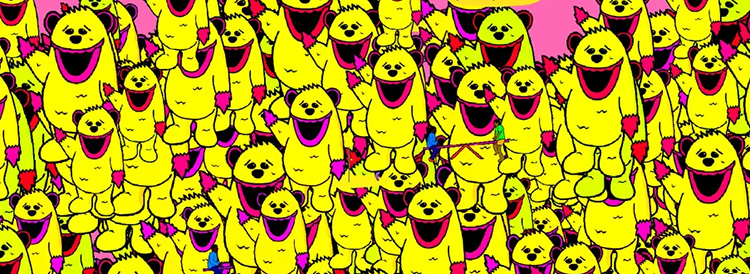
Plushy presents in two forms. His puppet form — used throughout the main videos — shows a character with purple lips, purple cheeks, a humanoid head, and stuffed animals arranged around him, often with a purple blanket draped over his head. The aesthetic lands somewhere between a 1990s PBS puppet and something a child would describe as friendly but that adults would immediately read as wrong. This gap between child perception and adult unease is one of the deliberate tensions the game exploits throughout.
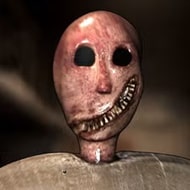
His humanoid true form is revealed during the Tickles password jumpscare and in several later videos. He appears as an elderly man sharing proportional features with the puppet — substantially larger, with the same quality of surface-level friendliness concealing something predatory. His behavior in the videos makes his rules clear: he is oriented entirely toward children. The theme song makes explicit that anyone over eighteen is not welcome. He enforces this with severity — the lore involving Janice Dakin establishes that he killed a girl he had previously kidnapped once she turned eighteen, having held her for seven years.
Tickles functions as a companion figure and also as a mechanism. The name is a password. Whether Tickles is an entity, a concept, or something else is part of what the ARG’s community continues to debate. Players who’ve watched the field videos notice that Tickles appears watching from the distance after the sewer sequence — present, not participating, observing.
The character design draws from a long tradition of found-footage and analog horror entities that use the aesthetic of children’s media as a mask. What distinguishes Plushy from many similar concepts is the specificity of his behavior rules and the consistency with which the game applies them. He is not a random monster. He has preferences, limitations, and something that functions like a code of conduct, which makes him considerably more unsettling than a creature that simply attacks.
The Marco Polo Chat Sequence
The instant message system in the restricted section is the only point in Plushy’s Playground where you communicate directly with the game’s antagonist. It is also among the most discussed mechanics in the community. The sequence begins when you’ve assembled enough information from the camera feeds and letter interactions. You use the messaging system to play Marco Polo with Plushy, calling out as Marco and waiting for his Polo — an echo of Video 2’s one-sided version, except this time there’s a response.
Plushy then asks a question: are you a kid or a grown up? This is not a rhetorical choice. What you say changes where the conversation goes. If you identify as a kid, Plushy engages warmly — attempting to make you laugh, asking what time it is. Responding with “Playtime” to the time question triggers the Carousel video delivery. If you say you’re a grown up, the interaction ends with hostility. The game gives you agency over this branch, which means some players experience a radically different version of the late-game sequence depending on how they answered a single question.
There is genuine debate in the community about whether identifying as an adult is “the real ending” or simply a dead-end branch. Neither camp has a definitive answer, which is consistent with how the game handles everything — nothing is ever fully explained, and Plushy’s Playground rewards the kind of player who is comfortable with ambiguity as a permanent condition rather than a temporary one.
Games that similarly use an interface-based system to put real player decisions in the center of their horror include Level Devil, which takes a very different mechanical approach but shares the quality of using player expectations against them.
Plushy’s Playground Controls
Because Plushy’s Playground runs entirely in a browser and operates as a simulated website, the control scheme is minimal and consistent throughout. Understanding the full range of available inputs matters more than it might seem — several puzzles use less-obvious browser interactions that players accustomed to conventional game controls don’t think to try.
- Left mouse button: Primary interaction. Used to click all objects, drag toys on the title screen toward Plushy to open the site, select letters in the camera feed section, and navigate between pages.
- Click and drag: Required specifically on the opening title screen where one of the five toys must be dragged to Plushy. This is the first interaction and the first clue that the game operates differently from a standard menu.
- Keyboard — text entry: Used to type passwords (including “Tickles” for the first password gate), type the username the_slide and the access code 967239 in the restricted section login, and input messages in the Marco Polo instant message system.
- Spacebar / Enter: Submit typed inputs in password fields and the messaging interface.
- Video playback controls: Standard browser video controls — play, pause, scrub. Pausing at specific frames in numbered videos reveals hidden details not visible during normal playback speed.
- Letter clicking sequence: In the camera feed section, letters are clicked individually in sequence. No drag — just discrete clicks in the correct order to spell target words like “email” and “playtime”.
There are no keyboard shortcuts for navigation between sections, no controller support, and no mobile-specific control scheme — the experience is designed for desktop browser use with a mouse and keyboard. Players attempting this on tablet or phone report that certain interactions, particularly the drag mechanic on the title screen and precise letter-clicking in the restricted section, are unreliable without a mouse.
What Players Say About Plushy’s Playground
The community around Plushy’s Playground is unusually invested for an experience this compact. Part of that investment comes from the ARG layer — clues hidden outside the site itself, embedded in creator social media posts, have sent players searching real-world locations. Below is a sample of how players actually talk about this game in forums, Discord servers, and community threads.
“The video where he just keeps calling Marco and no one answers him is the scariest part for me. I’ve played actual survival horror with good graphics and it hasn’t gotten to me the way that silence did.”
“Everyone spoils the Tickles password before they even explain what it does. I went in knowing the word and it still got me. The form change is fast.”
“Spent two hours clicking letters in the wrong order. The game gives you absolutely zero feedback when you’re wrong. Eventually you figure out that the absence of feedback is the feedback.”
“The Janice Dakin AOL page hit me harder than the jumpscares because it’s formatted to look like a real news archive. My brain kept trying to fact-check it.”
“The age question in the chat genuinely made me pause. I know it’s a browser experience and nothing actually happens to me either way, but I sat there for a minute before I answered.”

Frequently Asked Questions
How do you unlock the restricted adult section in Plushy’s Playground?
The restricted section requires two pieces of information gathered from different parts of the experience. The username is the_slide, obtained by winning the tic-tac-toe game that appears after entering code 66530 from the numbered code page. The access code is 967239, discovered through the broader series of video and puzzle interactions across the site. Both are required simultaneously — the login gate will not accept either alone. This is intentional gating that ensures players have completed a significant portion of the experience before accessing the final section.
What is the Tickles password and how does it work?
Tickles is revealed by Plushy himself in Video 3, where he tells the viewer they need a password to enter the playground and then gives it to them directly. Typing Tickles into the password field triggers Plushy’s true form jumpscare, which transitions to a secret page showing four five-digit number codes. The reveal-then-use structure is deliberate — the password functions as both a narrative moment and a progression gate, and the jumpscare attached to its use means players can’t simply look up the word without experiencing the consequence.
Does Plushy’s Playground have a real ending?
The experience doesn’t conclude with a traditional ending screen or explicit resolution. The late-game content, including the Marco Polo chat sequence and the Carousel video accessed by identifying as a child and responding “Playtime” to Plushy’s time question, represent the deepest layer of available content. However, the ARG component extends beyond the site — clues distributed through creator social media posts have continued to expand the experience since the site launched. Whether the current state represents a complete story or an ongoing one is a question the community actively debates, which is consistent with how analog horror ARGs handle closure.
Games That Share Plushy’s Playground’s DNA
The games that feel closest to this experience share specific qualities: they use the aesthetics of innocent or familiar content as a horror wrapper, they withhold instructions entirely, and they treat the player’s curiosity as both their greatest asset and the mechanism of their own unease. If Plushy’s Playground worked for you, several other experiences in this catalog operate in the same frequency.
- Interface-based horror that uses a fake digital system as its primary setting — KinitoPET runs on a similar principle of a friendly AI facade collapsing over time.
- Analog horror built around a children’s property turned sinister — Hello Kitty Horror applies the same inversion to a recognizable character.
- Horror ARG experiences with non-linear investigation structures where player observation drives all progress — Tungtung’s Nightmare fits this pattern closely.
- Atmospheric horror games that use specific video content and sound design as their primary dread delivery — Sonic’s Last Life weaponizes familiar IP in a comparable way.
The full horror catalog on this site includes a wider range of experiences across the subgenre, from survival horror to atmospheric ARGs.
Pro Tips for Plushy’s Playground
Pro Tip: Pause every numbered video at multiple points and check for frame-level details. Videos like 85971 and 37051 contain visual information that plays past at normal speed — a static frame held for two or three seconds can reveal content the casual viewer misses entirely. Use your spacebar.
Pro Tip: When you reach the camera feed section, do not focus only on Plushy’s appearances. The “Activity Detected” alert is important, but the real progress comes from the letter sequence interaction. Write down which letters appear, try both “email” and “playtime” first before attempting other combinations, and remember that the order of clicks matters — clicking all letters without clearing between attempts will not reset the sequence automatically.
Pro Tip: The Marco Polo chat doesn’t activate until you’ve completed both the “email” and “playtime” letter sequences inside the restricted section. Players who try to open the messaging interface before those steps find it unresponsive — it’s not broken, it’s locked. The sequence must be completed in that section first.
Pro Tip: When Plushy asks whether you’re a kid or a grown up, try both answers across separate sessions. The grown-up branch and the kid branch are genuinely different. You don’t get both paths in a single run — the conversation branches and doesn’t loop back. The community generally considers the kid-path interaction more complete, but the grown-up response reveals something about Plushy’s character that the other branch doesn’t show directly.
Pro Tip: If you find the tic-tac-toe game at code 66530 unexpectedly difficult — it is actually solvable, and winning is required for the username. Play methodically: take the center square first if available, then prioritize blocking over creating your own lines. The game is winnable with basic strategy, but it will not hand you the result.
Players who enjoy the layered puzzle structure here but want something more action-adjacent might also look at Fleeing the Complex, which replaces the investigative approach with fast decision-making but shares the quality of hiding better paths behind surface-level choices.
Plushy’s Playground is an experience that works best the first time you don’t know what to expect from it — but it holds up to revisitation precisely because of what you missed. The purple blanket, Tickles standing in the field, the AOL page dated 1991: these elements land differently once you know Janice Dakin’s full story, and the videos you watched before the restricted section will read as entirely different documents. Very few games in this space earn a second complete run the way this one does.










![Hello Kitty [HORROR] img](https://plushysplaygroundgame.com/wp-content/uploads/2025/03/hello-kitty-horror.jpg)





![FNF HYPNO’S LULLABY REBOOT [Demo] img](https://plushysplaygroundgame.com/wp-content/uploads/2026/08/fnf-hypno-s-lullaby-reboot-demo.jpg)