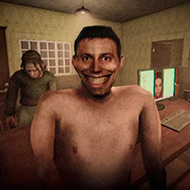
You step onto a creaking floorboard and instantly hear Granny shout from the next room, which is exactly how most runs in Granny Remake begin to fall apart. Granny Remake throws you into a locked house with only five days to escape, and every small mistake echoes through the entire space. The core loop in this game is simple: explore, solve, and survive while avoiding Granny, but every mechanic connects tightly with sound, timing, and memory. Even something as minor as opening a drawer too quickly can snowball into a full chase, especially on higher difficulties where Granny moves faster and reacts more aggressively.
| Genre |
Stealth Horror |
| Core Mechanic |
Sound-based stealth and escape puzzles |
| Main Enemy |
Granny |
| Key Items |
Hammer, Cutting Pliers, Padlock Key |
| Primary Goal |
Escape the house within five days |
Movement and Sound Pressure in Granny Remake
Granny reacts to noise, not sight alone, and that changes how players approach every hallway. Dropping a Cogwheel or stepping on a Bear Trap creates a sound cue that immediately pulls Granny toward your position. Early in the game, players often underestimate how far sound travels, especially when opening doors too quickly or knocking over objects in tight spaces like the Kitchen.
By the time you reach the Basement, the tension increases because tight spaces amplify mistakes. The Spider guarding the Weapon Key adds another layer, forcing players to combine stealth with timing while also managing vertical movement through ladders. This is where speedrunners separate themselves, using controlled drops and intentional noise to bait Granny away from key routes like the stairs leading back to the Main Hall.
Some players call this “sound routing,” a community term describing how you manipulate Granny’s pathing using noise. Aggressive players often try to outrun Granny instead, but that approach usually fails once doors start locking behind you.
Puzzle Routing Inside Granny Remake
The house is filled with interconnected puzzles involving items like the Padlock Key, Safe Key, and Hammer. What beginners get wrong is treating each item as isolated instead of part of a route. Efficient runs depend on remembering where items spawn and planning multi-step sequences before moving, especially since inventory space is limited to one item at a time.
For example, grabbing the Cutting Pliers early lets you disable the Alarm Wire near the main door, which prevents accidental alerts later. Once the Playhouse is active with Cogwheels, access to the Weapon Key becomes much safer, especially if Granny has been lured upstairs. These layers create a progression curve where early decisions directly affect late-game difficulty and recovery options.
Explorers tend to enjoy this structure because it rewards curiosity, while goal-focused players sometimes struggle with the backtracking required to optimize routes.
Granny Behavior Patterns and Adaptation
Granny is not random, even though it feels chaotic at first. She follows sound cues, patrol tendencies, and door interactions in a predictable way once you start paying attention. Learning how she reacts after checking a Wardrobe or Bed is key, especially since she often lingers nearby for a few seconds before leaving.
Once the Shotgun is assembled using parts found across the house, players gain a temporary advantage, but even then, Granny only stays down for a limited duration. That window forces precise planning, such as clearing the path to the Garage or unlocking the main door quickly before she recovers.
Some players criticize this mechanic because the stun duration feels inconsistent on Hard mode, where Granny recovers faster and punishes hesitation more severely.
Item Priority and Escape Planning in Granny Remake
Not all items matter equally, and understanding priority changes the entire game. The Master Key and Padlock Key are essential for the main door escape, while optional paths like the Car Escape require additional components like the Engine Part, Spark Plug, and Car Battery. Choosing which route to commit to early can save an entire in-game day.
Route stacking means carrying multiple objectives in one trip instead of backtracking repeatedly, which becomes critical once Granny starts patrolling high-traffic areas. Advanced players always think two steps ahead, especially when moving between the Kitchen, Basement, and Attic.
Once Granny starts camping near the main door or Garage, inefficient routes become almost impossible to recover from, which is why planning matters more than reaction time.
How do you escape faster using the main door?
To escape efficiently, focus on collecting the Padlock Key, Safe Key, and Master Key in a planned order while minimizing unnecessary movement. Disable the Alarm Wire early with Cutting Pliers to avoid triggering Granny near the exit. The Shotgun can help clear a final path, but experienced players rely more on positioning and timing than on stun windows.
Where does the Weapon Key usually appear?
The Weapon Key often appears in randomized locations like drawers, shelves, or hidden compartments, but accessing it requires activating the Playhouse with Cogwheels. The Spider guarding it forces careful movement, especially in narrow corridors where escape routes are limited. Players often memorize common spawn patterns to reduce search time and avoid wasting a full in-game day.
What is the safest hiding strategy?
The Wardrobe and Bed are reliable hiding spots, but timing matters more than location when Granny is nearby. Entering too early can cause Granny to investigate, while exiting too late can trap you in a loop. Experienced players listen for footsteps fading and door sounds before moving, using audio cues as their primary signal.
Granny Remake stands out because every system, from the Spider guarding the Weapon Key to the Alarm Wire near the main door, reinforces a single idea: survival depends on awareness. Once you understand how Granny reacts to noise and movement inside areas like the Basement and Kitchen, Granny Remake stops feeling random and starts feeling like a system you can finally control.