


Plushy’s Playground 2
Fleeing The Complex
Five Nights At Freddys 3
KinitoPET

Sonic’s Last Life

Level Devil

We Become What We Behold














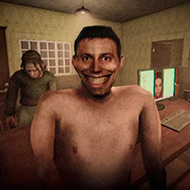

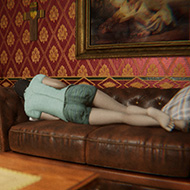

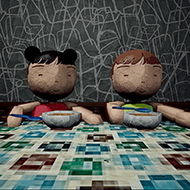


In Family Secrets 1: Empty Plate you start with one phone call, one kid brother, and an empty house — Miko’s mother says she’ll be away for work a few days, and just like that he’s the one responsible for Jun until she’s back.
| Genre | First-person psychological horror, walking simulator |
| Perspective | First-person |
| Main Character | Miko |
| Setting | A single home environment |
| Length | Short, completable in one sitting |
There’s no combat, no inventory grid, no skill tree — just Miko, Jun, and a house that starts feeling wrong almost as soon as their mother’s call ends. The game leans on that ordinary premise on purpose. A teenager left in charge of a younger sibling for a few days is believable enough that the early minutes barely register as horror at all, and that believability is doing more narrative work than any single scripted scare could manage on its own.
That’s the point. Players walking in expecting immediate scares often come away surprised by how long Family Secrets 1: Empty Plate lets the domestic setup breathe before anything visibly shifts. Miko still has to handle ordinary tasks — checking in on Jun, keeping the house functioning, answering the kinds of small responsibilities a parent would normally carry — and the game spends real time letting that routine feel routine before it starts undermining it.
Story-focused players tend to get the most out of this stretch, since the tension here comes from noticing what’s absent — an unanswered question, an empty plate left on the counter — rather than from anything jumping out. Newcomers to walking-simulator horror sometimes find this opening stretch slow, expecting a faster escalation, while players already familiar with the genre tend to recognize the pacing as deliberate rather than padded.
Jun himself is the emotional anchor of the setup: he’s young enough to need real care, and Miko’s growing unease is filtered through how Jun reacts to the house changing around them, which gives even quiet scenes between the two siblings a weight that a silent protagonist alone couldn’t carry.
Movement stays simple: walk through rooms, interact with objects, use a flashlight when a space goes dark. There’s no map to unlock and no second location waiting behind a loading screen — everything happens inside the same house, which keeps the scope tight and lets small details actually register instead of getting lost in a bigger world. That restraint means the game is effectively asking players to build a mental map of their own home base, the same way the anomaly-hunting genre more broadly rewards memorizing a baseline before anything starts to shift.
None of these systems are complicated individually, but layered together they turn a small house into a space that rewards attentiveness — the kind of design choice players who favor observation-driven horror over reflex-driven horror tend to single out as the strongest part of the game.
Early in the game, the horror is almost entirely implied — a silence that lasts a beat too long, a task that feels heavier than it should. By the time Miko has handled a few of Jun’s basic needs, the house starts introducing small wrongness on top of that routine, and the claymation-style visuals that read as almost cozy at first start working against the player instead of for them. That visual softness is a deliberate contrast players bring up constantly in discussions of the game, since a warm art style makes the eventual unease land harder than a conventionally grim aesthetic would.
Casual horror fans sometimes find the pacing slow compared to jump-scare-driven games, and that’s a fair criticism the game’s own community discussions bring up — this is a slow-burn, not a haunted house. Players expecting frequent scares in the first half often walk away underwhelmed, while players willing to sit with the discomfort tend to rate the buildup as the game’s best asset.
One specific sequence involving hide-and-seek with Jun is the moment most players point to when describing where the tone fully shifts, since it reframes a normal sibling game into something with real stakes. What makes that scene land isn’t a scripted jump — it’s that the mechanics of hiding and seeking, something the game already established as harmless play between Miko and Jun, suddenly carry consequences neither the player nor Miko was prepared for.
By the time the house’s wrongness becomes undeniable, the earlier domestic routine has done its job: players are already emotionally invested in Miko protecting Jun, which is exactly what the later, stranger sequences depend on to actually feel frightening rather than arbitrary.
Because Family Secrets 1: Empty Plate is short and linear, some players see it as focused and purposeful, while others wish there were more to explore once the ending arrives. Both reactions are common, and neither is wrong — it’s built to be experienced once, closely, rather than replayed for variety. Players coming from longer survival-horror titles sometimes describe the runtime as a limitation, while players who favor tightly authored short-form horror tend to describe that same runtime as the game’s biggest strength.
The single-location setting draws similarly split reactions: it keeps every detail purposeful, but it also means there’s no larger world to fall back on if a player wants more context beyond what Miko and Jun’s house reveals directly.
No. It’s built as a short, linear horror story centered on Miko and Jun, meant to be completed in a single sitting rather than played across multiple sessions. Most players finish it in well under an hour, since the pacing is designed around one continuous escalation rather than separate chapters to revisit.
No. There’s no combat system or score-based challenge. Progression comes from exploring the house and completing the tasks tied to caring for Jun, not from fighting anything, which keeps the tension rooted in observation and responsibility rather than in reflexes or weapon management.
It ties directly into the game’s focus on food, care, and responsibility — small domestic details like an unwashed or empty plate become part of how the story signals that something in the house isn’t right, and the recurring image reappears at key points to mark how far the situation has drifted from ordinary.
Family Secrets 1: Empty Plate gets its unease from staying small — one house, one night, one plate left behind — and it’s that restraint, along with Jun’s quiet dependence on Miko throughout, that makes the story stick with players long after the credits roll.