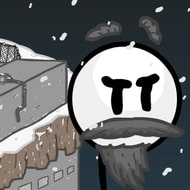
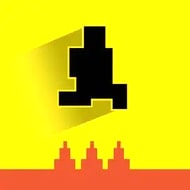
Short Life looks like a simple ragdoll platformer, but every step forward risks losing a limb if you misjudge a spike trap. The game builds its identity around brutal physics and unexpected hazards that punish careless movement, creating a constant tension between progress and survival.
| Genre |
Physics Platformer |
| Core Mechanic |
Avoid deadly traps using precise timing |
| Main Character |
Ragdoll man |
| Hazards |
Spikes, mines, swinging blades |
Trap Awareness in Short Life
Each level introduces new hazards that require careful observation before any movement. Spikes are often placed in deceptive patterns, while mines react to proximity and can trigger chain reactions that affect nearby objects. Players must pause and read the environment rather than relying on reflexes alone.
Beginners frequently rush into traps, assuming timing alone will save them. In reality, understanding trigger zones and recognizing visual cues like slightly raised ground or suspicious gaps is more important than speed. Many early failures come from ignoring these subtle indicators.
By mid-level sections, combining hazards like falling crates, spinning saws, and spikes creates layered challenges that require planning multiple steps ahead. This is where players start to develop what the community calls “trap reading,” a skill built through repeated failure.
Exploration-focused players often suffer here because curiosity leads them into unsafe paths, while cautious players learn to test areas before committing fully.
Movement Timing in Short Life
The ragdoll man responds slowly to input, which adds difficulty to even simple jumps. Jumping too early or too late often leads to instant failure, especially when landing zones are narrow or surrounded by hazards.
Experienced players learn to make small adjustments rather than large jumps. Precision movement becomes more reliable than aggressive play, particularly when navigating sequences with multiple traps in quick succession.
Once moving platforms appear, maintaining balance becomes another challenge. The physics system can shift unpredictably, especially when landing slightly off-center, causing the ragdoll man to stumble into danger.
By later levels, timing must align with moving hazards like swinging blades, forcing players to synchronize movement with environmental patterns rather than acting independently.
Recognizable Player Moments
The sound of stepping near a hidden mine is a moment many players remember instantly. That subtle audio cue often signals danger just seconds before an explosion, creating a brief window for reaction.
Another common moment is barely surviving a spike trap only to fall into a second hazard immediately after. These chained failures are part of what makes progression feel both frustrating and rewarding.
Players often describe a specific scenario where the ragdoll man loses balance after landing, slowly tipping forward into danger. That delayed failure feels different from instant mistakes and is widely discussed in forums.
These moments create a rhythm where success feels earned through awareness rather than luck.
Difficulty and Player Types
Casual players often struggle with repeated failures because progress can reset quickly after mistakes. Persistence-focused players, however, enjoy learning patterns and gradually improving through repetition.
Challenge seekers push for no-damage runs across all levels, treating the game as a test of consistency rather than completion. This approach requires near-perfect execution and deep familiarity with hazard patterns.
Some players criticize inconsistent physics, especially during complex jumps where outcomes feel unpredictable. Others argue that unpredictability is part of the challenge and adds tension to every movement.
The game’s difficulty curve becomes noticeable after the first several levels, where traps become more complex and require combining multiple skills at once.
How many levels are in Short Life?
The game includes dozens of levels, each introducing new hazards and combinations that increase in difficulty. Early levels focus on basic spikes and mines, while later stages combine multiple elements like moving platforms and swinging blades. This progression keeps the challenge evolving.
What is the hardest trap in Short Life?
Mines combined with moving platforms are often considered the hardest because they require both timing and spatial awareness. A slight misstep can trigger an explosion while the player is already off balance. These sequences are especially difficult in later levels.
How do you survive longer in Short Life?
Move slowly and observe trap patterns before taking action. The ragdoll man requires careful control, and rushing leads to most failures, especially near hidden mines. Patience and consistent timing improve survival significantly over repeated attempts.
Short Life turns every spike, mine, and swinging blade into a test where the ragdoll man survives only through careful timing, balance control, and awareness of each hazard pattern.