What happens when the photo you just printed doesn’t match what you saw through the lens? That’s the question Photomaly keeps asking, shift after shift, as you run the portrait studio your father left behind and try to figure out which details in a developed print are wrong before they become your problem.
| Genre |
Psychological horror, management sim |
| Platform |
PC |
| Style |
PSX-style, first-person |
| Players |
Single-player |
| Objective |
Fill customer orders and survive the shift while catching anomalies |
Running the Studio in Photomaly
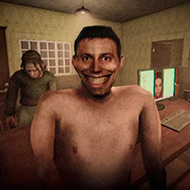
Your first shift starts with chores that feel almost mundane: reset the fuse box in the back alley, grab the flashlight, sweep the floor, flip the shop sign. It’s a deliberate lull before the game teaches you its three core rules — stand on the marked spot in camera mode with the right rotation, wait for the green confirmation icon, and only then take the shot. Get any of those wrong and the print comes out unusable, or worse, wrong in a way you don’t notice until it’s too late.
Once a photo is captured, you interact with the shop computer while holding the camera to transfer it, then develop and print before bagging the finished order in an envelope to hand over. That loop — greet, read the order slip, shoot, transfer, develop, print, deliver — is simple in isolation, but Photomaly stacks pressure on top of it as the studio’s supply of Paper, Ink, and Film starts running thin mid-shift.
Customers ask for specific photo types, and reading the order slip carefully matters more than it seems to at first. Careful players who double-check pose and framing before committing to a shot waste less film than players rushing to clear the queue.
Spotting Anomalies Before They Spot You
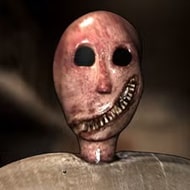
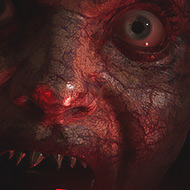
The core tension in Photomaly isn’t jump scares, though they exist — it’s the slow, dread-soaked work of studying a freshly printed photo for something subtly wrong. A shadow that falls at the wrong angle, a customer’s expression that doesn’t match the pose you captured, a detail in the background that wasn’t there when you framed the shot.
Players who treat every print as routine tend to miss anomalies until the game forces a consequence on them. Community discussion around Photomaly leans heavily on this inspection habit — comparing notes on which anomaly types are easy to miss and which studio upgrades make the darkroom easier to scan under pressure.
By the time you’re a few in-game days into a run, the anomalies stop being isolated events and start feeling connected to something the studio itself is hiding. That escalation is deliberate, and it’s the reason players who found the opening slow usually end up recommending the back half.
Endings and the Choice Behind Them
Photomaly runs across roughly six in-game days and takes about two hours from open to close, with the story branching based on how consistently you clear each day’s anomaly quota. Stay on top of it and reach the agent on the final day for the Family Matters ending; let the quota slip and the run resolves into the Reset Protocol ending instead.
Neither ending is flagged as the “correct” one in the moment, which is part of why players discuss both endings so much rather than treating one as a failure state. It’s an honest piece of design friction — the game doesn’t hold your hand about which path you’re on until it’s already decided for you.
How long does it take to complete Photomaly?
How long does it take to complete Photomaly? A full run covers about six in-game days and takes roughly two hours, though players chasing all ten Steam achievements report closer to an hour and a half to two hours total.
What is the Backrooms section in Photomaly? It’s a disorienting detour that pulls you out of the familiar studio layout and into a liminal, maze-like space — one of the more divisive stretches players discuss, since it leans harder into jump scares than the slower anomaly-hunting that defines the rest of the shift.
Does Photomaly have an endless mode? An endless mode is in development rather than available at full release, and player requests for more shopping options and additional customer types are aimed specifically at that upcoming mode rather than the core story run.
Photomaly earns its dread from repetition with a twist buried inside it — you’ll recognize the counter, the darkroom, the marked spot in camera mode long before you recognize what’s actually wrong with the photo in your hands. Whether your shift ends in Family Matters or Reset Protocol, that gap between routine and realization is the whole point.