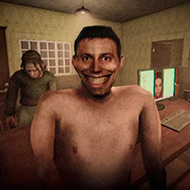
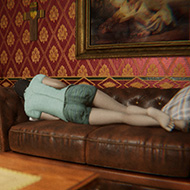
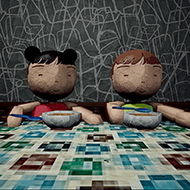
In The Inn-Sanity you start inside a strange hotel where every room feels slightly wrong, which matters because each door leads to a different threat pattern and forces you to adapt immediately.
| Genre |
Horror Adventure |
| Main Location |
The Inn |
| Core Mechanic |
Room exploration and survival encounters |
| Objective |
Escape the inn |
Room Structure in The Inn-Sanity
The Inn-Sanity uses a modular design where each room introduces a distinct mechanic such as stealth, chase, or puzzle interaction. Early rooms act as controlled environments that teach basic movement and awareness. Players quickly realize that no two rooms behave the same way.
As the game progresses, rooms begin combining mechanics. A single space might require avoiding a patrolling figure while solving a timed interaction. This layering increases tension and forces players to think ahead rather than react.
Exploration-focused players tend to check corners and notice subtle clues, while fast-moving players often trigger encounters that could have been avoided with observation.
Enemy Encounters in The Inn-Sanity
Encounters vary depending on the room type, with different enemies reacting to sound, movement, or line of sight. Some follow predictable patrol routes, while others react dynamically to player behavior.
Players often recognize a specific audio cue where footsteps echo louder than usual. This moment signals an incoming chase sequence, and failing to react quickly usually results in capture.
Stealth-oriented players rely on timing and positioning, while players who rush tend to get caught due to limited escape routes.
Progression Pressure in The Inn-Sanity
The Inn-Sanity increases difficulty by reducing safe areas as players progress. Early sections allow brief pauses, but later rooms remove these moments entirely, creating constant pressure.
Resource management becomes noticeable after several rooms, especially when players must choose between exploring or moving forward quickly. This creates tension between curiosity and survival.
Some players criticize the pacing because difficulty spikes can feel uneven, particularly when transitioning between different room mechanics.
What Players Learn Late in The Inn-Sanity
Late-game success depends on recognizing patterns in room layouts and anticipating what lies beyond each door. Experienced players begin predicting room types based on visual cues.
Door reading — players interpret small visual details around doors to guess the type of challenge inside, which becomes essential in later stages where mistakes are costly.
This skill separates experienced players from beginners who rely purely on reaction and often fail in complex sequences.
How do rooms change as you progress in The Inn-Sanity?
Rooms evolve by combining mechanics such as stealth and chase sequences. Early rooms introduce one concept at a time, while later rooms layer multiple challenges together. This progression requires players to adapt strategies constantly.
What is the best way to avoid enemies in The Inn-Sanity?
Avoiding enemies depends on understanding behavior patterns tied to each room. Listening for audio cues and observing movement paths helps players plan safe routes. Rushing through rooms usually leads to failure.
Why do players struggle with later sections in The Inn-Sanity?
Later sections remove safe zones and increase complexity. Players must rely on pattern recognition and planning rather than reaction speed. Mistakes become more punishing due to limited recovery options.
The Inn-Sanity becomes most intense when a quiet hallway suddenly shifts into a chase after a misleading door cue, especially when you hesitate and hear those echoing footsteps closing in behind you.