


Plushy’s Playground 2

Fleeing The Complex

Five Nights At Freddys 3

KinitoPET

Sonic’s Last Life

Level Devil

We Become What We Behold















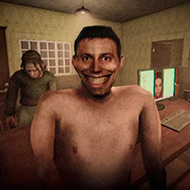

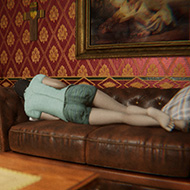





What do you do when the sound in Another Girl In The Wall is coming from inside a wall that clearly has no room behind it? That’s the kind of impossible-space horror this game leans on, and it rarely bothers explaining how or why before moving on to the next unsettling detail.
This listing’s build is thin on confirmed specifics beyond what’s visible in a direct playthrough — there’s no accessible lore drop, no named antagonist, no confirmed backstory to point to. What’s actually playable sits in the small, familiar subgenre of liminal-space horror: narrow corridors that shouldn’t connect the way they do, sound cues coming from directions that don’t match the visible geometry, and a persistent sense that the space itself is the threat rather than any single visible figure.
Rather than invent detail that isn’t confirmed in the build, it’s worth being upfront about that limitation — what’s here is a short, atmosphere-first horror sketch rather than a fleshed-out narrative experience, and it should be approached with that expectation rather than one of deep lore or a defined cast.
Games built around impossible domestic spaces like this one rely almost entirely on the player’s own unease rather than scripted threats. There’s no combat, no clear win state beyond continuing forward, and the tension comes from not being sure whether backtracking is safe or whether the space has quietly rearranged itself behind you.
What makes this genre effective when it lands is restraint — the moment a game over-explains what’s making the sound behind the wall, most of the dread evaporates. Leaving that question open, the way this build does, is a deliberate choice shared across the whole liminal-horror subgenre, not a gap in production.
Community discussion around this specific style of game tends to focus less on “solving” the space and more on comparing notes about which detail each player noticed first — a sound, a doorway that wasn’t there before, a wall panel that looks subtly wrong. That comparison is most of the actual social experience around a short horror sketch like this one, since there isn’t a deeper narrative thread to debate instead.
New players consistently move too fast, treating the space like a straightforward corridor to walk through rather than a set of details to actually notice. Slowing down and paying attention to the geometry — which walls seem too thick, which corners repeat suspiciously — is where whatever tension the build has actually lives, and rushing past it skips most of the experience.
The other common assumption is that the sound behind the wall is building toward a jump scare payoff. It largely isn’t, and players expecting that kind of release tend to come away disappointed simply because the format isn’t built around one big reveal.
Short, ambiguous horror sketches like this one circulate specifically because they’re quick to experience and easy to talk about afterward without needing to explain a full plot. A five-minute walkthrough clip does most of the advertising a longer, more polished horror title would need a trailer for, and the mystery of an unexplained wall-sound is exactly the kind of hook that travels well in that format.
It’s also worth being honest that this isn’t a substitute for a fully produced horror release. There’s no character work, no lore document waiting to be found, and no confirmed explanation for the central anomaly the title refers to. Players expecting that depth will find the experience thin; players looking for a quick, unsettling five-to-ten-minute sit will get exactly what the title promises.
Another Girl In The Wall doesn’t give you much to hold onto beyond the discomfort of a space that doesn’t add up, and for the players this specific flavor of liminal horror is built for, that’s typically the entire point rather than a shortcoming.