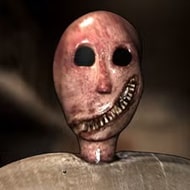
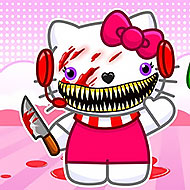
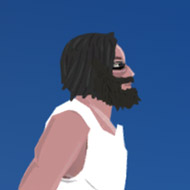
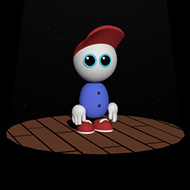
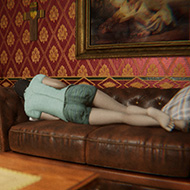
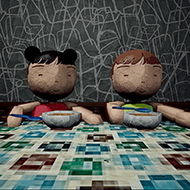
Endacopia looks like a scrapped piece of 90s edutainment software, all soft colors and simple point-and-click puzzles — but it plays like something built to unsettle you the moment you stop paying attention.
| Genre |
Point-and-click psychological horror |
| Protagonist |
Mellow, guided by the player as guardian angel |
| Structure |
Prologue plus Chapters I–III, roughly 6 hours average |
| Style |
Retro pixel graphics, nonlinear puzzles, multiple endings |
A Lost Child and an Unseen Guardian
The premise of Endacopia is simple on paper: Mellow, a lost and easily distracted child, needs to find his way home, and you’re guiding him as an unseen guardian angel he can’t directly see or hear in any conventional sense. That framing shapes every puzzle in the game, since Mellow reacts to environmental cues rather than direct instruction.
He starts each area with little context and no real understanding of the rules governing the world around him, which mirrors the player’s own confusion in early areas like Timesville and Misery Town. That shared disorientation is deliberate, and it’s part of why Endacopia feels different from more conventional puzzle-adventure games.
Mellow’s world is populated by speaking signs, humanoid clocks, and other characters that behave according to logic that only makes sense once you’ve spent real time in the game, at which point patterns start to click into place.
Point-and-Click Logic Without Hand-Holding
Movement in Endacopia uses standard WASD controls with mouse-based interaction, but the puzzles themselves rarely explain their own rules directly. Instead, environmental text and background details give the clues, and players are expected to piece together intent from context rather than an on-screen objective marker.
This is where the community vocabulary around Endacopia gets specific — players talk about “reading the room” in a literal sense, since background gags and seemingly decorative details often turn out to be functional clues. A player exploring an area for the first time and dismissing a strange sign as flavor text will frequently find themselves stuck later because of it.
The puzzles are genuinely solvable without outside help in most cases, and there’s a real sense of accomplishment tied to figuring one out cold rather than checking a guide immediately.
Scribbly, the Waterfall Door, and Object-Based Puzzles
Several of Endacopia’s puzzles hinge on specific inventory items interacting with specific characters or fixtures — using a pencil on a character named Scribbly, for example, or navigating a coded door near a waterfall using items collected earlier. These object-based puzzles reward players who backtrack and experiment rather than rushing toward the next visible exit.
A camera item collected early on becomes one of the more versatile tools in Mellow’s inventory, useful for interactions that go beyond simple documentation and tying into more than one later puzzle.
None of these puzzles are especially long individually, but they stack up across the Prologue and Chapters I through III into a playtime that averages around 6 hours for most players completing the full game.
The Yeti Minigame and Other Detours
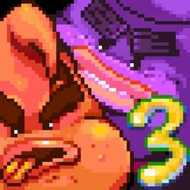
Outside the core puzzle structure, Endacopia includes standalone minigames like a directional-input yeti minigame using the arrow keys, and a first-person gunslinging encounter against a cowboy clown that plays completely differently from the rest of the game. These detours break up the exploration rhythm and are frequently cited by players as favorite moments.
Some of these minigames tie into unlockable content, including a gold soccer ball ribbon awarded for completing the game and revisiting Mellow’s room afterward, which functions as a soft completionist reward for players who explore fully.
Once you reach the house section of Chapter III, several branching choices — including which saw you pick during one sequence — don’t meaningfully change the outcome, which some players find slightly deflating after a game that otherwise rewards careful attention to detail.
What Trips Up New Players Early On
The most common early mistake is treating background animations as pure decoration. Because Endacopia’s art style constantly layers small animated gags into its scenes, new players tend to filter out visual noise the way they would in a more conventional game, missing clues embedded directly in that noise.
Players also frequently underestimate how much environmental dialogue matters. Skipping past signs or characters that seem like throwaway jokes is one of the fastest ways to get stuck in areas like the Office, where the solution is often hinted at well before it’s needed.
Is Endacopia scary in a jump-scare sense or a slow-dread sense? Mostly the latter, though there are genuine jump-scare moments — one tied to uncovering something near an exit late in the Prologue catches most first-time players off guard specifically because the pacing beforehand feels relatively calm.
Body Horror and the Line Some Players Draw
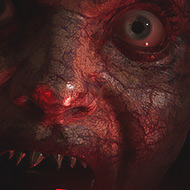
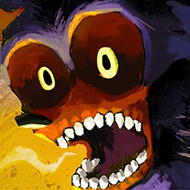
Endacopia doesn’t shy away from body horror, disturbing imagery, and darker themes woven into its otherwise colorful presentation, and that contrast is intentional rather than accidental. It’s also the aspect players debate most, since the tonal whiplash between cute edutainment aesthetics and genuinely unsettling content isn’t going to land the same way for everyone.
For players sensitive to that kind of imagery, the shift can feel abrupt rather than earned, particularly in the game’s more intense chapter climaxes. That’s a fair criticism, and it’s worth knowing going in rather than being surprised by it mid-playthrough.
For everyone else, that same unpredictability is a large part of what keeps Endacopia’s world feeling genuinely strange rather than following a predictable horror-game formula from start to finish.
Whether you’re still puzzling out what the waterfall door wants from you or you’ve already claimed the gold soccer ball ribbon, Endacopia keeps circling back to the same quiet unease: Mellow trusts you completely, and the world around him almost never deserves that trust.