


Plushy’s Playground 2
Fleeing The Complex

Five Nights At Freddys 3

KinitoPET

Sonic’s Last Life
Level Devil

We Become What We Behold
















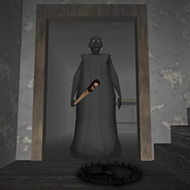
The candle burns down whether you’re paying attention to it or not — that’s the one fact about Granny Multiplayer that catches almost everyone off guard the first time it goes out mid-search.
The build tied to this listing runs under the name No More Candle, a co-op-flavored horror-escape project built around a single shared light source instead of the traditional Granny-style single-player stalking loop. Whoever’s holding the candle sees; everyone else navigates by whatever the candle-holder’s beam catches in passing, which turns basic room searching into a coordination problem as much as a horror one.
There’s no tutorial screen walking new groups through this. You figure it out by watching the candle gutter, hearing someone across the map call out that they’ve lost visibility, and realizing the group’s actual enemy might be poor communication as much as whatever’s patrolling the house.
Early rounds are forgiving — the candle’s fresh, visibility is decent, and mistakes are easy to recover from. That changes fast once the flame starts visibly shrinking. Distance from the candle-holder becomes dangerous in a way it wasn’t a few minutes earlier, and players who wandered off to search solo start scrambling back toward the light.
By the time the candle is down to its last stretch, the entire dynamic flips: staying close to the light source is safer from the environment but puts the whole group in one place for whatever’s hunting them.
Whether a single shared light source is a clever twist on the Granny formula or an unnecessary complication is genuinely split among the people who’ve played it. Groups who communicate well tend to praise how tense the mechanic makes coordination; groups who don’t tend to call it needlessly punishing, since one careless player can put the whole session in the dark.
Compared to a traditional single-stalker, single-player Granny-style game, the shared candle changes the entire risk calculus. It’s not just about avoiding one threat anymore — it’s about managing a resource the whole group depends on, which is the actual reason No More Candle gets brought up as distinct from the games it visually resembles.
It’s worth being upfront that beyond this one shared-light mechanic, there isn’t a lot of additional content layered on top — no named antagonist confirmed beyond whatever’s patrolling the house, no branching objectives, no unlockable rooms. The candle system is doing almost all of the design work here, and whether that’s enough depends entirely on how much a group enjoys the coordination pressure it creates.
Groups that survive longest tend to develop simple callout habits early — announcing when the candle’s visibly shrinking, confirming positions before splitting up, calling out the moment visibility drops rather than staying quiet and hoping someone else notices. None of this is enforced by the game itself; it’s purely a habit players bring from outside, and groups without it tend to lose the candle far sooner than groups who establish some baseline communication in the first few minutes.
The absence of any in-game prompt for this is itself part of the design. Nothing tells you to communicate — you learn that the hard way, usually after a first candle loss ends a round faster than expected.
Granny Multiplayer isn’t really about the house or whatever’s stalking it by the end of a session — it’s about whether your group kept that one candle alive long enough to matter, and how fast things fall apart the moment nobody’s watching the flame.