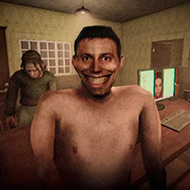
You press the phone to your ear before the first ring even finishes, one palm flat against the bedroom door because the handle just rattled. Hi, What’s Your Emergency drops you into that half-second before help arrives, and the game never lets the dread ease off once the call connects — not even when the dispatcher’s voice tries to sound calm.
| Genre |
Psychological Horror, Narrative |
| Setting |
A single locked bedroom |
| Perspective |
First person, phone call interface |
| Anthology |
Violent Horror Stories 2 |
Answering the Call in Hi, What’s Your Emergency
The entire game plays out through one phone call. You dial, a dispatcher picks up, and from that moment every choice you make is a line of dialogue rather than a physical action. There’s no inventory, no map, no combat — just the phone, the door, and the grandmother somewhere on the other side of it. That narrowness is the point. Players who go in expecting a typical horror game with roaming hallways are often thrown by how contained the whole thing is, and a few even restart within the first minute assuming they’ve missed a way to move around the room.
What makes the call tense isn’t jump-scare timing, it’s pacing control that sits almost entirely with the dispatcher’s questions. You have to answer clearly enough to get help moving, but quietly enough that the sound doesn’t carry past the bedroom door. Speak too long, and the knocking outside gets louder. Community discussion around the game keeps circling back to this tension between honesty and volume — it’s a mechanic built entirely out of restraint, and it’s one of the few horror games where the dialogue box itself functions as the danger meter.
Early on, most players fumble the balance between answering fully and answering fast. The dispatcher needs an address, a description of what’s happening, and confirmation that you’re safe to keep talking — and rushing any of those responses tends to trigger a check from outside the door. Slowing down, oddly, is the safer instinct here. Players who’ve replayed the call a second time often describe deliberately under-answering the dispatcher’s first question, holding back detail until the footsteps outside settle, which shifts the entire rhythm of the opening minute.
Once the dispatcher confirms units are on the way, a second layer kicks in: keeping the call alive without giving away your exact position in the room. That’s the moment several players flag as the point where Hi, What’s Your Emergency stops feeling like a tutorial and starts feeling like the actual game, since every prior choice about tone and volume gets tested at once.
The Bedroom Door and the Signs Beginners Miss
The door itself functions as the game’s only real threat indicator. There’s no health bar, no visible enemy state — just sound design tied to the door, footsteps that pause, floorboards that creak closer, then stop. Players who treat those cues as background atmosphere rather than information tend to get caught out by the ending they land on, sometimes without realizing what specifically triggered the shift until they replay the scene.
Narrative-focused players tend to slow down and read every dispatcher line twice, picking apart word choice for hints about how much time is left before the grandmother checks the room again. Players chasing a clean first run instead push through the call as fast as possible, which usually means missing the quieter audio cues near the door entirely — a mistake that rarely feels punishing in the moment but almost always shows up in a worse ending.
By the time the dispatcher asks you to confirm your exact location, the pressure has usually shifted from “get help” to “don’t get caught,” and that shift is where most of the discomfort players describe actually comes from. It’s a short game, but that closing stretch is the part people bring up most in comments and playthroughs, often specifically naming the moment the floorboard creak stops rather than fades as the point their stomach dropped.
Speedrun-minded players who’ve timed multiple attempts note that the fastest safe route through the call still requires at least one deliberate pause near the door — skipping it consistently produces a worse outcome, which suggests the game is tuned against pure optimization in a way some players find frustrating and others find exactly right for the subject matter.
Once the dispatcher starts asking follow-up questions rather than just gathering basics, the footsteps outside typically change pattern too, and recognizing that overlap — dispatcher tone shifting alongside the sound design — is one of the clearest tells that the situation in the room is about to escalate.
Volume management ends up being the closest thing the game has to a skill to master: how loudly you respond to the dispatcher directly correlates with how the footsteps outside behave in the following seconds, and players who ignore that relationship tend to blame the ending on bad luck rather than a missed cue.
- Keep responses to the dispatcher short once the door goes quiet, since a long answer during a silent stretch is what most often draws the footsteps back toward the room.
- Treat any pause in footsteps as a cue to lower your voice further, because that pause usually means the grandmother is listening rather than walking away.
- Confirm your location early rather than waiting for the dispatcher to ask twice, since a repeated question tends to coincide with the door being tested from outside.
Is Hi, What’s Your Emergency Based on a True Story?
Yes — the entry is framed around a real account of a child locking themselves in a room to call for help during a violent incident at home, and that grounding is part of why the tone stays restrained rather than exaggerated. The game doesn’t dramatize the situation with typical horror flourishes like the grandmother, the phone call, and the bedroom door are all played with a plainness that mirrors how such a call would actually sound rather than how a horror script usually stages one.
How Long Does a Full Call Take to Complete?
A single playthrough is short by design — one uninterrupted call from the moment you dial to whichever ending your answers lead toward, with no chapter breaks or loading pauses to reset the tension. Most players finish a first run in well under half an hour, though replays to see alternate outcomes with the dispatcher tend to run faster once the opening beats are familiar.
Are There Multiple Endings Depending on What You Say?
Yes, the outcome shifts based on how you answer the dispatcher and how you manage your volume near the bedroom door, which is why players compare notes afterward — two people rarely land on the exact same ending on a first run. Some endings hinge specifically on whether the door gets tested a second time before help arrives, which isn’t something the game explains outright.
Some players find the true-story framing makes Hi, What’s Your Emergency harder to sit with than a typical anthology entry, and that discomfort is discussed almost as often as the ending itself — right down to arguments over which line to the dispatcher actually changes what happens at the bedroom door, and whether the grandmother’s footsteps respond to word choice or simply to volume.