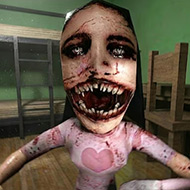
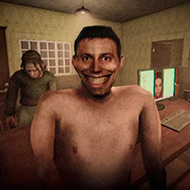
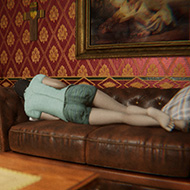
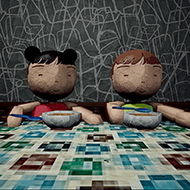
MATILDA looks, from the thumbnail, like it might lean sweet or whimsical. It plays like a stalking-horror escape game instead, dropping you into a locked school building where the actual goal has nothing to do with lessons and everything to do with getting out before whatever’s patrolling the halls finds you first.
| Genre |
Stealth escape horror |
| Setting |
An empty school building at night |
| Core Loop |
Search rooms for tools, avoid detection, reach an exit |
The School MATILDA Actually Traps You In
The build behind this listing runs under the working title Schoolboy Search, and it sits squarely in the small but consistent genre of night-school escape horror — search classrooms and offices for keys or tools, keep track of a patrolling threat’s rough position by sound, and get to a locked exit before you’re caught in the open. There’s no dialogue system explaining the setup; the tension comes entirely from room-to-room searching under a ticking sense that staying still too long is its own risk.
What makes this genre work when it’s done right is the search itself never feeling safe. Every drawer you open, every locker you check, costs you time the patrolling threat can use to close distance, so the game constantly asks whether the item behind door three is worth the seconds it takes to find out.
Where Beginners Get Caught in MATILDA
New players tend to search rooms in the same order every time, which works until the patrol pattern shifts and punishes exactly that predictability. Early in the game a fixed route feels efficient; later on, it’s the reason players get cornered in a hallway with no second exit.
The other common misstep is ignoring ambient sound cues in favor of visual scanning. Since this style of game leans on audio distance more than sightlines, players who play with the volume down tend to walk in blind far more often than they realize.
What Divides Players About This Style of Game
The lack of a map or objective tracker is the most argued-over design choice in this entire genre, MATILDA included. Some players find the disorientation essential to the tension; others find themselves backtracking through identical-looking corridors and losing patience before they ever reach a real scare. Neither side is wrong, exactly — it’s just a design choice that rewards a specific kind of patient player and frustrates everyone else.
How MATILDA Handles Difficulty Without a Real Tutorial
There’s no ramp-up here in the traditional sense — no early floor that’s noticeably safer than the rest of the school. What passes for difficulty progression is almost entirely player-driven: the more of the map you’ve explored, the more rooms you have to keep track of mentally, and the more likely you are to misjudge how close the patrolling threat actually is. That’s a deliberate trade-off common to this style of game rather than an oversight, and it rewards players who build a mental map early rather than relying on trial and error room by room.
It’s worth being honest that Schoolboy Search doesn’t offer much beyond that core loop — no branching story, no named characters to attach to, no twist waiting at the exit door. What’s here is a tight, functional example of night-school escape horror rather than a genre-defining one, and it’s best approached with that scope in mind.
MATILDA isn’t hiding a big narrative twist behind its locked classroom doors — what it’s actually selling, under the working build of Schoolboy Search, is the discomfort of searching a dark, empty school one room at a time, never sure if the next door you open puts something between you and the way out.