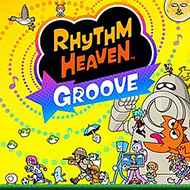
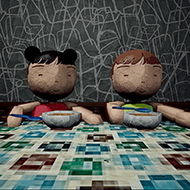
You tap A on the fourth beat, miss it by a fraction, and the little umbrella onscreen closes a half-second late — enough for the game to flash “OK” instead of “Superb.” That tiny gap between what you heard and what you pressed is the entire challenge of Rhythm Heaven Groove, a game that looks like a cute button-mashing collection until the audio cues start hiding themselves.
| Genre |
Rhythm / Music |
| Platform |
Nintendo Switch |
| Stages |
16 stages, 80+ minigames |
| Modes |
Solo play, Beatspell RPG, local multiplayer |
Reading the Beat Instead of the Screen in Rhythm Heaven Groove
Most rhythm games lean on scrolling notes or falling bars. Rhythm Heaven Groove strips that away and asks you to feel the tempo instead, using visual cues as a backup rather than a crutch. In the early minigames — bouncing anthropomorphic balls through hoops, timing an umbrella’s open-and-close — the audio and animation line up closely enough that newer players barely notice they’re being trained to listen first. That training matters later, when some sections deliberately blur or drop the visual timing marker altogether.
The narrator, Lil’ Miss Reeds, walks new players through each minigame’s rules before the beat starts, and her commentary can be toggled off once you know a stage by heart. Series veterans usually mute her early, since her cues become redundant after the first playthrough. The word “game” gets used loosely by players here, because each individual minigame is really its own tiny game nested inside the larger collection.
What separates a mediocre run from a medaled one is whether you’re still watching the screen when the audio cue disappears. That’s the moment Groove stops being cute and starts being demanding, and it’s also the moment most players fall in love with it or bounce off entirely.
Chasing a Superb Through the Remix Stages
After every four minigames, Groove throws a Remix stage at you that recombines everything from that block into one continuous performance with a new backing track. Remix stages are where the community vocabulary really kicks in — players talk about “onbeat” versus “offbeat” runs, and getting an Amazing! rank on a Remix is treated as a genuine flex on forums. Remix 9 in particular is a fan favorite because it flashes through earlier minigames while previewing content still to come.
Difficulty in Groove isn’t linear so much as it’s cumulative. By the time you reach the later stages, you’re not just tracking one rhythm pattern — you’re holding three or four in your head simultaneously, switching between them mid-song. A construction-site minigame with synchronized floor sweepers, for instance, demands a completely different internal clock than the earlier hoop-jumping stage, and Groove doesn’t slow down to let you adjust.
Completionists chase Superb ranks across every stage to unlock bonus content through the Rhythm Toy Box, while more casual players are often satisfied clearing Remix stages once and moving on. Both approaches are valid, but only one of them earns bragging rights in the Discord servers built around the game.
Where New Players Lose the Rhythm
The single biggest beginner mistake in Rhythm Heaven Groove is watching the character models instead of listening for the downbeat. The animations are charming enough to distract from the actual timing window, and players who rely purely on visual pattern recognition tend to stall out around stage six or seven, once the game starts obscuring cues on purpose.
Handheld mode helps more than most players expect. Docked play introduces just enough input latency to throw off Perfect timing on stricter minigames, and plenty of forum posts trace a sudden difficulty spike back to nothing more than switching from a Pro Controller to handheld.
Rings earned through cooperative and competitive minigames unlock bonus content in the Group Toy Box, which gives newer players a reason to keep playing multiplayer stages even before their solo skills catch up.
Beatspell and the Debate Over Groove’s RPG Mode
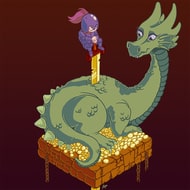
Beatspell is the new eight-chapter rhythm-RPG hybrid unlocked gradually as you progress, where a spellcasting character fights monsters by tapping buttons to the beat instead of pressing attack buttons freely. It’s a genuinely different structure from the rest of the game, and it’s also the most divisive addition among longtime fans, some of whom find the pacing slower than the tight, self-contained minigames Rhythm Heaven built its reputation on.
That criticism is fair, and it’s worth being upfront about it: Beatspell’s rogue-like final chapter asks for a level of patience that the four-minigame-then-Remix structure elsewhere in Groove never demands. Players who came to the series for short bursts of rhythm chaos sometimes bounce off Beatspell’s slower rogue-like chapter entirely.
Still, the mode adds roughly 8 chapters of content beyond the core 16 stages, which is a meaningful amount of extra playtime for anyone who enjoys it.
How many stages does Rhythm Heaven Groove have?
Groove is built around 16 core stages, each containing four minigames followed by a Remix stage, on top of over 80 individual minigames total and 30-plus multiplayer minigames playable with up to four people locally.
Is Rhythm Heaven Groove hard for series newcomers?
It starts gently but escalates quickly once cues become audio-only, and later Remix stages combine multiple patterns at once — newcomers should expect a real difficulty curve after the first few stages rather than a consistently easy ride.
What is Beatspell in Rhythm Heaven Groove?
Beatspell is the game’s rhythm-RPG mode, where a spellcasting character battles monsters using rhythm-timed spell inputs across eight chapters, including a rogue-like final chapter that plays noticeably differently from the main minigame structure.
Whether you’re chasing a Superb on every Remix or just trying to survive Beatspell’s rogue-like chapter without losing your rhythm entirely, Rhythm Heaven Groove keeps circling back to the same idea: stop watching, start listening. That’s the lesson Lil’ Miss Reeds is quietly teaching from the very first stage, even if most players don’t notice until they’ve already missed a beat.