


Plushy’s Playground 2

Fleeing The Complex
Five Nights At Freddys 3

KinitoPET

Sonic’s Last Life

Level Devil

We Become What We Behold



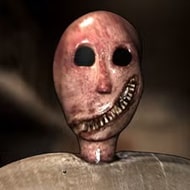









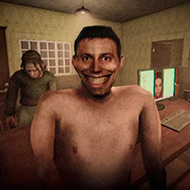

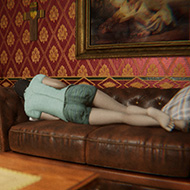

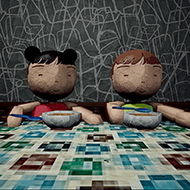


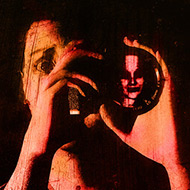
Shutter Story looks like a photo-editing chore at first glance, dragging sliders across someone else’s family album, but it plays like sliding into a nightmare one adjusted frame at a time.
The setup is simple enough to explain in a sentence: your friend Eli is convinced his family is haunted, his parents dismiss it, and as a budding photo editor, you’re the one he brings the evidence to. From there, Shutter Story hands you a stack of his family’s photographs and home videos and asks you to find what’s actually hiding in them, one frame at a time, without ever telling you outright what you’re supposed to be looking for.
You’re never a physical presence stalking through the house in the traditional sense — the game keeps you at a remove, working through media rather than walking hallways directly, which is part of why the horror lands differently than a typical first-person chase game. The dread builds through what you notice in a still image, not what jumps out at you, and that distance is exactly what makes certain discoveries land harder than a jump scare would.
Community reaction has repeatedly drawn comparisons to detective-style photo puzzle games and analogue horror more broadly, and that comparison holds up — Shutter Story sits closer to careful observation than jump-scare pacing, even though it absolutely still delivers moments that land hard, particularly once a photo you’d already cleared turns out to have something you missed the first pass through.
Players who’ve sat with Eli’s story for a full session often describe a specific rhythm setting in: skim a photo, adjust it, find nothing, move to the next, then suddenly hit one that demands three or four passes before the detail surfaces — and that unevenness in pacing is part of what keeps the analysis from feeling mechanical.
The core tool is the in-game software, SpectralAware 2.1, which you use to adjust exposure, contrast, and noise on every photo and video clip before sorting whatever you find into categories — Apparitions, Simulacra, Strange Lights, Demonic Entities, and a few other classifications the manual walks you through in detail as you unlock them.
Beginners consistently undercorrect. Cranking exposure or noise reduction too gently leaves details buried in the frame, and the game doesn’t forgive a shallow pass — accuracy in categorization matters, since mistakes carry consequences for how Eli’s story plays out. Players chasing a fast completion often skim past the manual’s category definitions early on, then have to backtrack once ambiguous findings stop fitting neatly into their assumptions, sometimes rechecking three or four earlier photos before realizing which category they’d been misapplying.
The manual itself becomes essential reading rather than flavor text. Distinguishing a Simulacrum from a Strange Light isn’t always obvious on a first look, and misclassifying findings is one of the more common ways a careful playthrough still ends up with a worse outcome than a player expected. Completionist-minded players tend to keep the manual open in a second window throughout, cross-checking every ambiguous find rather than trusting a first impression.
Once noise reduction is pushed too far in the opposite direction, fine details can wash out entirely, which is a mistake almost as common as undercorrecting and one the game gives no direct warning about — you simply submit a blank finding and move on, only realizing later that something was there.
The publicly available demo runs through the first stretch of the full game — a set of 19 photographs and videos for analysis, paired with short first-person exploration sections that break up the desktop puzzle work. That structure alone tells you a lot about the pacing Shutter Story is going for: analysis, then a breath of physical space, then back to the album.
Simulacra are among the trickier categories to nail down early on — faces or shapes that resemble something they shouldn’t be, easy to dismiss as a trick of light until you’ve adjusted the frame enough times to be sure. Getting comfortable telling a Simulacrum apart from an ordinary Strange Light is one of the clearer signs a player has settled into the game’s rhythm, usually somewhere around the seventh or eighth photo in the demo’s set of 19.
Once you reach the videos rather than the static photos, the workload changes noticeably — scrubbing through footage for a single frame where something’s wrong is a different kind of patience than adjusting a still image, and it’s the point where several players say the demo’s tension actually spikes hardest. Players used to the earlier static photos tend to under-scrub the first video clip, moving past the exact frame that mattered simply because a photo never demanded that kind of frame-by-frame attention before.
By the time a player reaches the later photographs in Eli’s album, the categories stop feeling separate and start overlapping — a single image might carry both a Simulacrum and a Strange Light, and recognizing that a finding doesn’t have to be singular is one of the quieter skill checks the demo includes without ever stating it outright.
The most common point of debate isn’t the horror itself but the pacing of the desktop sections — some players find the careful, methodical photo analysis exactly what makes the game distinct from faster horror titles, while others feel the exploration breaks interrupt momentum right as a photo analysis was building tension, a criticism that shows up often enough in comment sections to be one of the more consistent pieces of feedback developers have acknowledged.
Analog horror fans have pointed to Shutter Story’s blend of documentary-style found media and first-person dread as reminiscent of games and films built around uncovering something through recovered footage rather than direct confrontation, and that lineage shows in how deliberately the game withholds a clean answer to what’s actually happening to Eli’s family. Players who favor that ambiguity tend to be the same ones defending the slower desktop pacing others criticize.
How long the full version runs beyond the demo isn’t fully settled yet, since the release is still ahead, but the demo’s roughly 45-minute slice — built from those 19 photos and videos — already gives a reliable sense of how methodically the finished game intends to unfold. Whether photo classification stays this granular in Eli’s later, more disturbing findings is one of the more common things players speculate about after finishing the demo.
A smaller but recurring complaint centers on how forgiving the categorization system feels once a player has learned the manual’s definitions — a few community posts note that later photos become easier to solve than the difficulty curve initially suggests, which some read as pacing that eases off right when the story tension is climbing.
Eli’s album stays the emotional center of Shutter Story throughout, and it’s the SpectralAware software — not a flashlight, not a weapon — that ends up doing the real work of dragging his family’s hidden history into view, one overcorrected frame at a time.